Dammam, Al Khobar, Dhahran and Jubail
Industrial AI in the Eastern Province for plants, energy contractors and industrial service firms
Vantage Systems builds industrial artificial intelligence (AI) for the Eastern Province of Saudi Arabia: failure prediction for plant equipment in Jubail, crew and equipment dashboards for the service contractors of Dammam and Al Khobar, and bid analysis for suppliers to the energy sector around Dhahran. Every model is tested against faults before a planner sees an alert, and plant data stays in the region agreed with the plant owner.
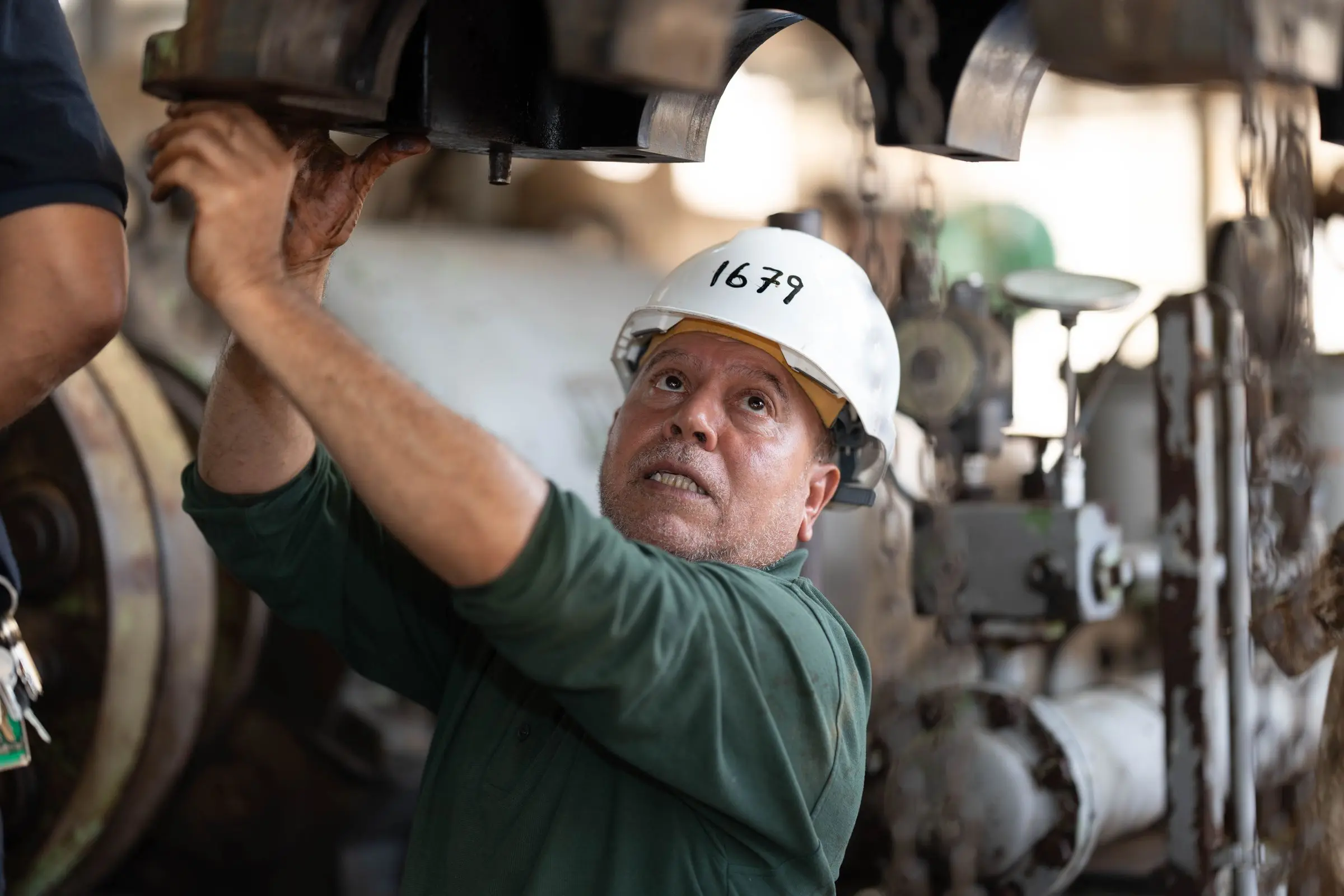
Key facts
- Who it is for
- Petrochemical and process plants, energy contractors, and firms supplying maintenance, inspection, scaffolding and manpower.
- Typical first phase
- One critical machine family instrumented and modeled, or one contractor's crew and equipment view.
- Integrates with
- Programmable logic controllers (PLCs), historians, the computerized maintenance management system (CMMS) and timesheet tools.
- Proof before alerts
- Every model must catch faults introduced on purpose before a planner relies on it.
Services in Eastern Province
- Predictive maintenance in Eastern ProvincePart-level wear models for compressors, pumps and fans in Jubail plants, proven on deliberate faults first.
- Operational dashboards in Eastern ProvinceCrew, equipment and billing views for Al Khobar and Dammam contractors running several turnarounds at once.
- Custom agents in Eastern ProvinceAgents that read plant bid packages and scopes of work and list every technical and commercial requirement.
- Data infrastructure in Eastern ProvincePipelines from controllers and historians to one shared store in the agreed data region, reused by every later model.
- Quality inspection in Eastern ProvinceProcess models that flag drifting product quality from setpoints and lab results before off-spec material piles up.
What do Jubail and Dammam plants ask AI to do first?
Predict which rotating equipment will fail and which part is wearing. Jubail Industrial City, administered by the Royal Commission for Jubail and Yanbu, is a major center of the Kingdom's petrochemical and energy-intensive industry, and its plants run pumps, compressors, fans and conveyors where one unplanned trip ripples through the whole unit.
Our predictive maintenance for oil and gas work starts from the signals the controllers already log, adds vibration, temperature or camera data where a failure mode is invisible, and only goes live after the models catch faults we introduce on purpose. That discipline comes from our live work on packaging machines in the United States, where models predict wear on specific parts.
How do Al Khobar service contractors keep track of crews and equipment?
Most of them do it with spreadsheets, radios and a weekly reconciliation that never quite closes. A firm supplying scaffolding, insulation, inspection or manpower to several plant turnarounds at once needs to know which crews are on which permit, which cranes and compressors are idle, and which timesheets have not been billed.
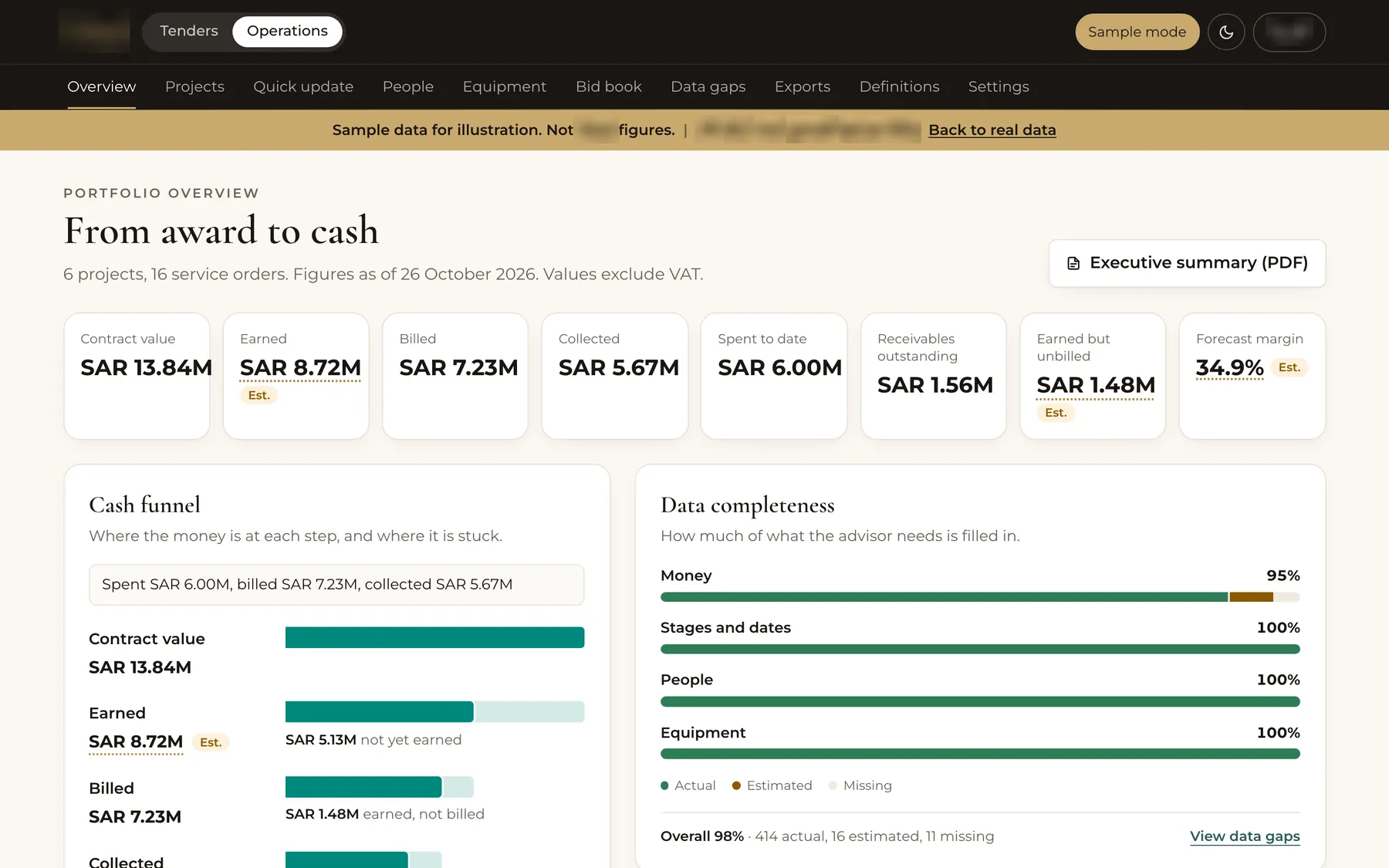
An operations dashboard built for industrial services puts crews, equipment, timesheets and invoices in one view per site and per client. It is the same shape as the dashboard we run for a Saudi holding company, adapted to shutdown schedules and shift patterns.
- Crews by site, shift and certification expiry.
- Equipment by location, hours and next service.
- Hours worked against hours billed, by client purchase order.
What we build in the Eastern Province
Equipment health models
Part-level failure prediction for critical rotating equipment, connected to work orders in your maintenance system.
Contractor operations board
Crews, equipment and billable hours across sites and clients, refreshed daily from timesheets and field reports.
Scope of work reader
An agent that reads bid packages and scopes from operators and engineering contractors and drafts the compliance checklist.
Plant data foundation
Data infrastructure that cleans historian and controller tags once, so models and dashboards share them.
Nearby areas we serve
LiveSaudi holding company, Saudi Arabia
Example: equipment and crews on one screen for a Saudi group
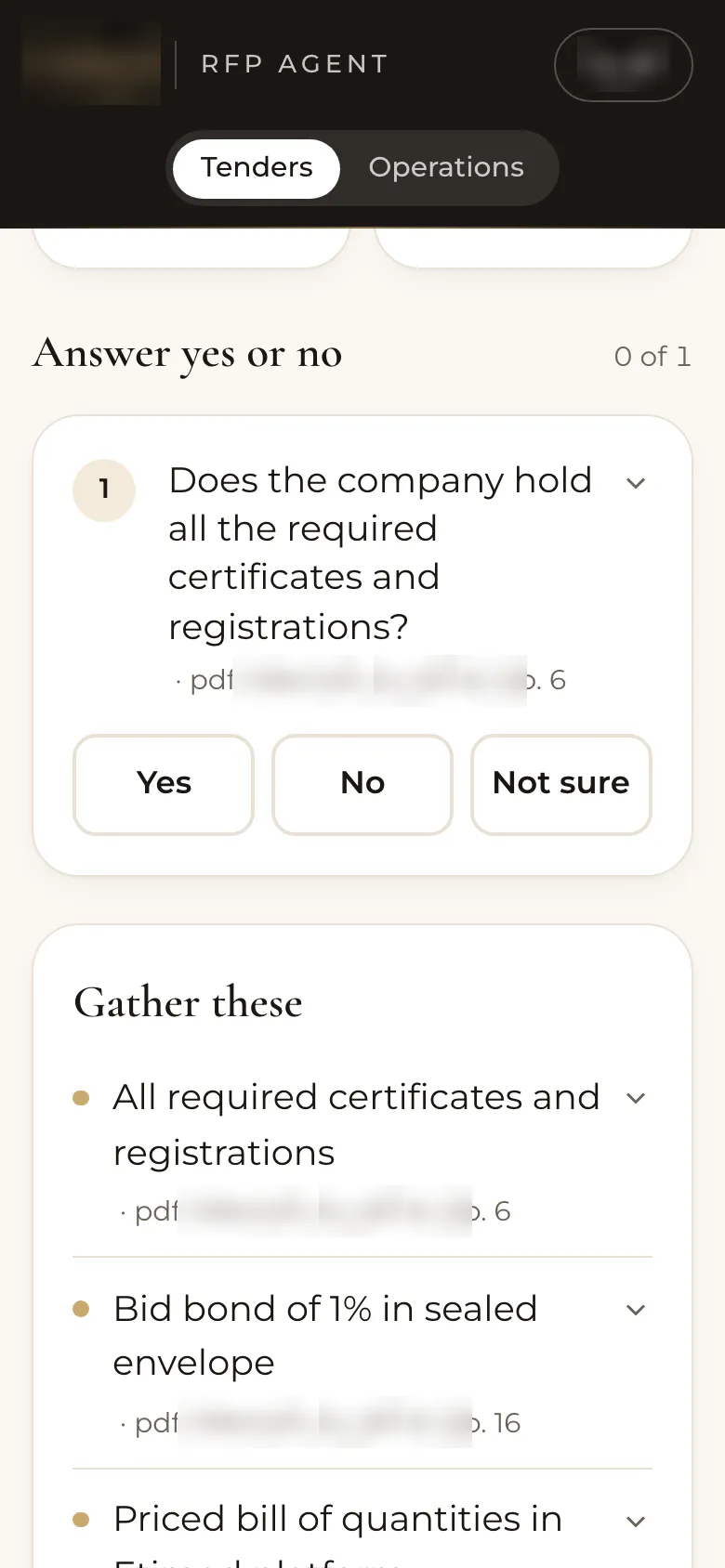
A Saudi holding company tracked projects, money, equipment and crews in separate places. We built an operations dashboard that brings them together and a tender agent that reads every file in a government package and lists what the bid needs. It is live and used by leadership, and the equipment and crew half is exactly what an Eastern Province service contractor asks for first.
Read the full storyHow an engagement works
Map the unit or the yard
Discovery with maintenance or operations staff lists failure modes, existing tags and the reports people already keep.
Scope one asset class
A fixed-scope, fixed-price phase for one machine family or one contractor division, with plant security rules written in.
Prove it before anyone relies on it
Models must catch deliberate faults and dashboards must reconcile to finance before they reach planners or managers.
Extend across units and maintain
Proven models roll to more equipment and sites, and we retrain and support them after launch.
Frequently asked questions
Can you work inside a plant's security rules?
Yes. The plant's network segregation, permit and access rules are inputs to the design. How the system reaches historian and controller data is settled with your control systems engineers during discovery.
Do we need to install new sensors?
Sometimes. Many compressors and pumps already log enough through supervisory control and data acquisition (SCADA) and the historian to start. We add sensors only where existing signals cannot see the failure.
Do you serve Bahrain-based firms working in the Eastern Province?
Yes. Many contractors work on both sides of the King Fahd Causeway, so one system often holds records from both countries. Which rules govern each record is settled in discovery, and our Bahrain page covers that side of the work.
Is a dashboard or a model the better first step?
For a service contractor, the dashboard almost always comes first. For a plant with one machine family causing most of its trips, the model does.
Who does the engineering?
Mohamed El Askary, the founder, builds the systems himself, from data pipelines and models to screens. The person on the first call is the one who writes the code.
Related
- IndustryEnergy, oil and gasFailure prediction for pumps and compressors from historian and control data, plus field dashboards and tender agents for energy operators and service firms.
- IndustryIndustrial servicesAI (artificial intelligence) dispatch agents, work order paperwork agents and service dashboards for maintenance contractors, inspection firms and field service companies. See the build.
- Predictive maintenanceFor oil and gas operatorsPredictive maintenance for oil and gas pumps and compressors, built on your historian and SCADA (supervisory control and data acquisition) data, with edge units for remote sites and safety-led installs.
- InsightAI in Saudi Arabia: implementation under Vision 2030What it takes to put AI into production in Saudi Arabia: the national data rules, where data may live, e-invoicing and Etimad links, and bilingual design.
- IndustryGovernment contractors in the GulfTender agents that read Etimad packages in Arabic and English, plus project and billing dashboards, for Saudi and Gulf contractors and holding companies.
- ServicePredictive maintenanceVantage Systems builds predictive maintenance AI that names the part about to fail and the window to fix it, from sensors, controller data and wear models.
Built for operators with real scale. Most engagements are scoped in the tens of thousands of dollars and up.
Start a conversation.
Tell me what's slowing your operation down. I read every message myself and reply within one business day.