Maintenance for oil and gas operations
Predictive maintenance for oil and gas: pumps, compressors and rotating equipment
Vantage Systems builds predictive maintenance for oil and gas operators that reads vibration, temperature and pressure on pumps, compressors and other rotating equipment and warns of a failure while there is still time to plan the repair. It draws on the historian and SCADA (supervisory control and data acquisition) data you already collect, and any new sensor in a hazardous area is specified with your safety team.
Key facts
- What it is
- Equipment health models for rotating equipment at well pads, compressor stations, gathering systems and plants.
- Integrates with
- Plant historians, SCADA, your CMMS (computerized maintenance management system) and existing condition monitoring.
Which equipment benefits most from predictive maintenance?
The machines whose failure stops production or forces an expensive call-out. That usually means reciprocating and screw compressors at compressor stations, centrifugal and positive displacement pumps on transfer and injection service, rod lift and electric submersible pumps on wells, and the drivers, gearboxes and cooler fans around them.
Each gets models for its own failure modes. A compressor valve going bad looks nothing like a worn pump bearing, so we model each mode separately, using vibration spectra, bearing and discharge temperatures, suction and discharge pressures, rod load where it is measured, and run hours.
Can it use our historian and SCADA data?
Yes, and that is where most projects start. Years of tagged data often already hold the early signs of past failures; the work is aligning tags with the maintenance records that say what actually broke, then testing whether a model would have warned in time.
Gaps are normal. Polling rates set for operations can be too slow for vibration, so where a failure mode needs higher-frequency data we add a sensor or edge device rather than pretend the historian has it. The plumbing behind this is covered on our data infrastructure page.
How do you handle remote sites and hazardous areas?
Remote sites run the models at the edge. Data is processed on location, alerts go out over whatever link the site has, whether cellular, radio or satellite, and records are stored and forwarded when the link drops.
Any device placed in a classified location, such as a Class I, Division 1 or Division 2 area, or a zoned area under the zone system used in the United States and internationally, must carry the right rating and go through your permit-to-work process. We design sensor placement, ratings and installation with the operator's safety team and qualified electricians, and nothing goes on equipment until that team has signed off. Our energy, oil and gas industry page covers the rest of our work in the sector.
What we build for oil and gas operators
Historian and SCADA connectors
Connections that pull the tags each model needs, each mapped to the asset and failure mode it informs.
Failure-mode models
Per-asset models for valves, bearings, seals and drivers, ranked by risk and explained with the readings behind each flag.
Edge units for remote sites
Local processing with store-and-forward for sites on intermittent links, built to the ratings the location requires.
Maintenance workflow
Alerts become CMMS work orders with evidence attached, and technician findings flow back to improve the models.
LivePackaging machinery manufacturer, United States
Where the method comes from
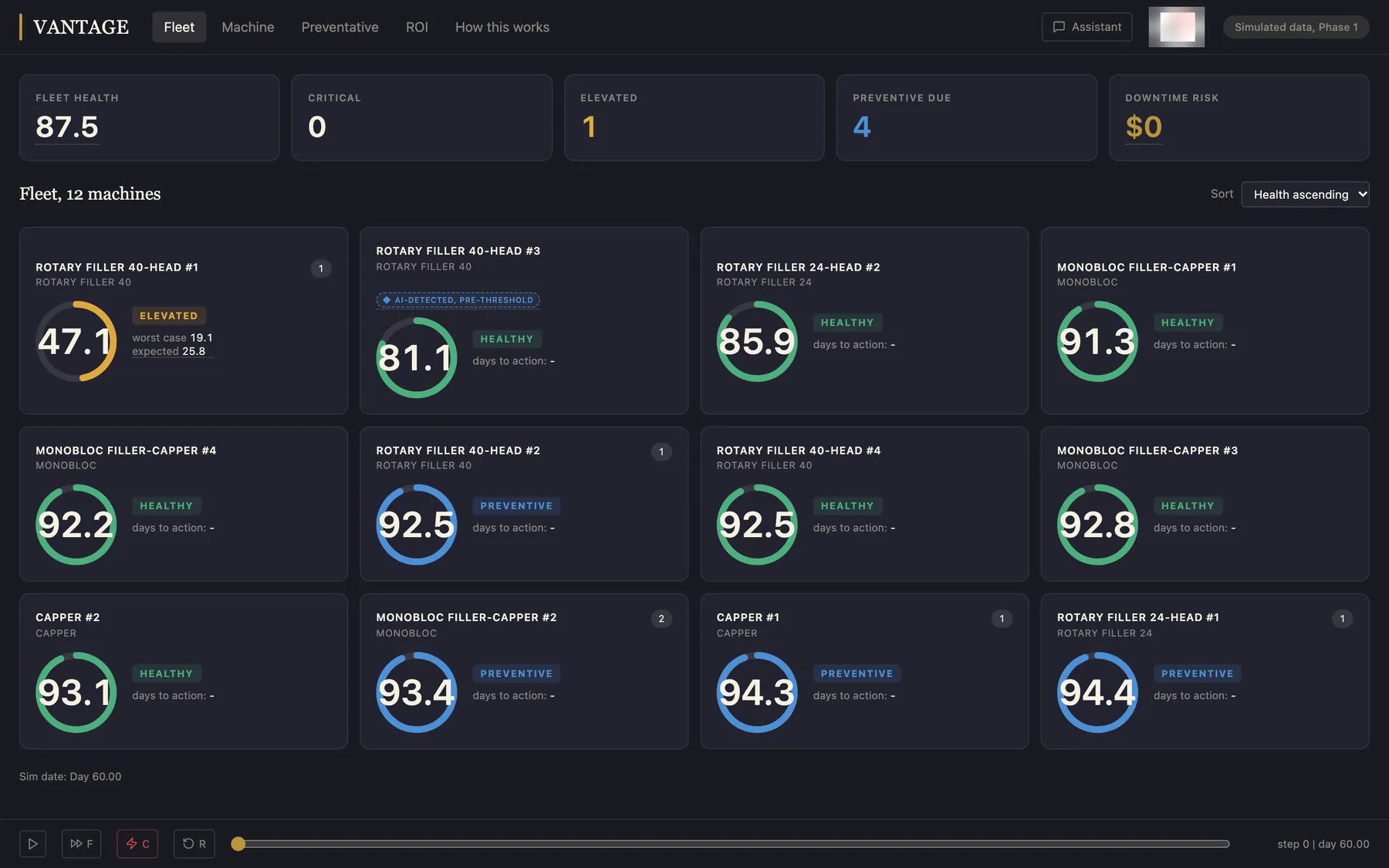
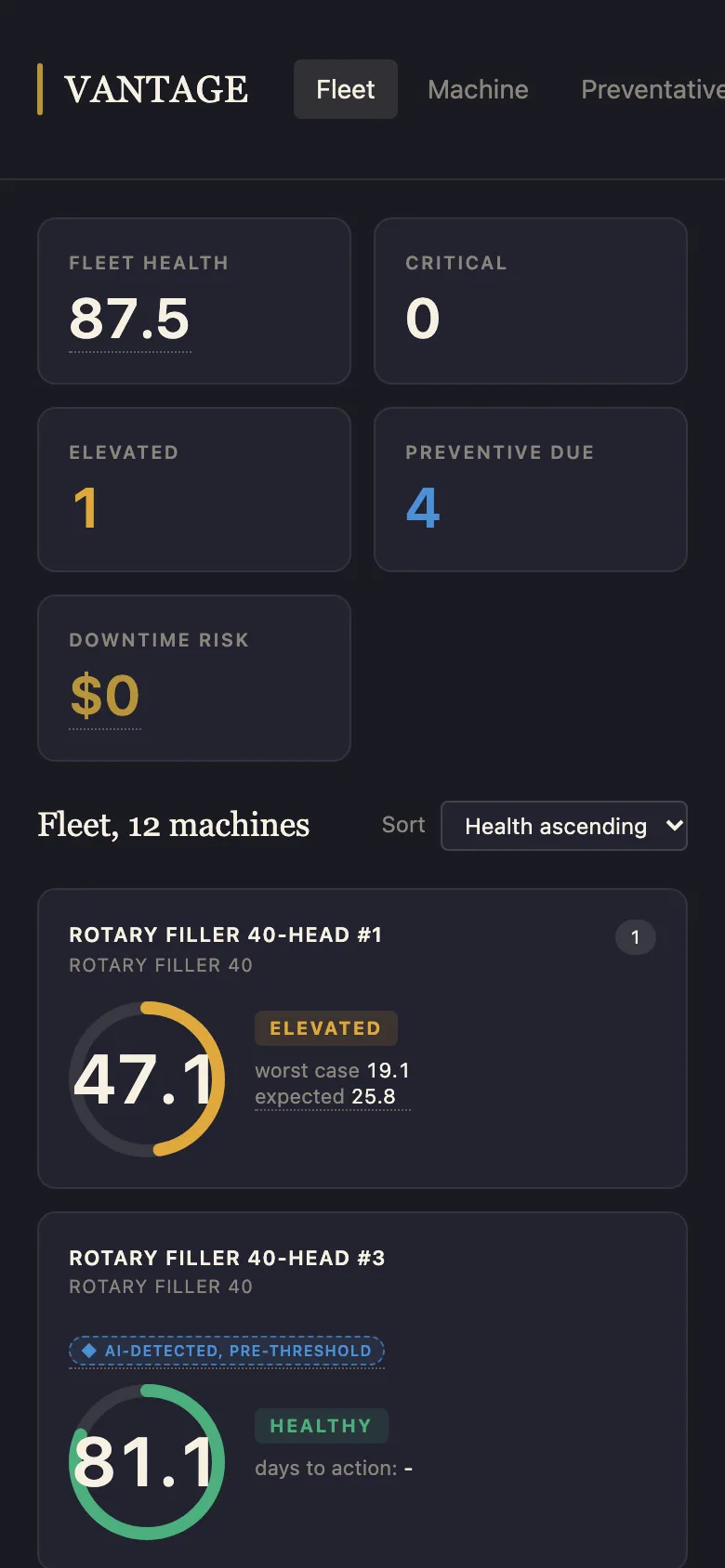
Our live predictive maintenance for a packaging machine builder sits in a different industry, on rotary fillers rather than compressors. It shows what we bring: sensors chosen per failure mode, models that predict wear on a named part, and validation against faults introduced on purpose before a technician acts on a prediction. In oil and gas, where seeding a fault is unsafe we validate against historical failures and bench tests agreed with your engineers instead.
Read the full storyHow an engagement works
Asset and failure review
We work with reliability and operations leads to rank equipment by the cost of failure and list the modes worth predicting.
Historian backtest
Historian, SCADA and work order history are pulled to test whether past failures were visible early enough.
Field pilot
One site or one class of equipment runs with live alerts reviewed by your reliability engineers, any new sensors installed under your permits.
Scale and operate
More sites and asset types join in phases, and we run and maintain the models, connectors and edge units after launch.
Frequently asked questions
Who acts on an early warning?
Your people do. The model raises an alert with the readings behind it, and your operators and reliability engineers decide whether and when to intervene.
We already monitor vibration on critical machines. What does this add?
Coverage of the machines in between, plus context. Large compressors often have online monitoring while the pumps and smaller units around them get only route readings, and combining process data with whatever vibration data exists covers more of the fleet.
Can you work with operators in Saudi Arabia and the Gulf?
Yes. Saudi Arabia is our home base in the Gulf, the founder works natively in English and Arabic, and data stays in the region agreed with you. The National Cybersecurity Authority's controls for operational technology are part of the design where they apply.
Do you install the sensors yourselves?
Qualified electricians do, under your permits in hazardous areas, working to the sensor specification and placement we design. Each signal is checked during commissioning before any model depends on it.
What happens after launch?
We run it, retraining models as equipment is overhauled and keeping connectors current as systems change.
Related
- ServicePredictive maintenanceVantage Systems builds predictive maintenance AI (artificial intelligence) that names the part about to fail and the window to fix it, from sensors, controller data and wear models.
- IndustryEnergy, oil and gasFailure prediction for pumps and compressors from historian and control data, plus field dashboards and tender agents for energy operators and service firms.
- Predictive maintenanceFor solar operatorsPredictive maintenance for solar fleets that combines SCADA (supervisory control and data acquisition), monitoring and weather data to flag failing inverters, trackers and weak strings early.
- Predictive maintenanceFor packaging machine builders and plantsPredictive maintenance for packaging machines that names the failing part on fillers, cappers and labelers before the line stops. Live on a rotary filler fleet.
- PricingHow we priceFixed scope and a fixed price for each phase, and what drives the cost of a build.
Built for operators with real scale. Most engagements are scoped in the tens of thousands of dollars and up.
Start a conversation.
Tell me what's slowing your operation down. I read every message myself and reply within one business day.