Failure prediction for food and drink production
Predictive maintenance for food and beverage plants that fits around sanitation
Vantage Systems builds predictive maintenance for food and beverage plants that watches the pumps, mixers, conveyors and refrigeration compressors a plant cannot afford to lose mid-run. Each prediction comes with a suggested repair window lined up with your sanitation and changeover schedule, so maintenance happens when the line is already down.
Key facts
- What it is
- Wear and failure prediction for processing, packaging and refrigeration equipment.
- Who it is for
- Dairy, beverage, bakery, meat, snack and prepared food plants with continuous or long production runs.
- Data sources
- Washdown-rated sensors, supervisory control and data acquisition (SCADA) tags, controller signals and work order history.
Which equipment in a food plant is worth predicting?
Start with equipment whose failure spoils product or stops a whole line, not everything that has a motor. In most plants that short list is the same few asset types.
Each has its own warning signs, so we instrument for the failure, not the asset class.
- Refrigeration compressors: discharge temperature, oil pressure, motor current and run hours
- Pumps: seal wear, cavitation and bearing heat on product and utility pumps
- Mixers and blenders: gearbox temperature and motor load drift across batches
- Conveyors: gearmotor heat, bearing condition and belt tracking
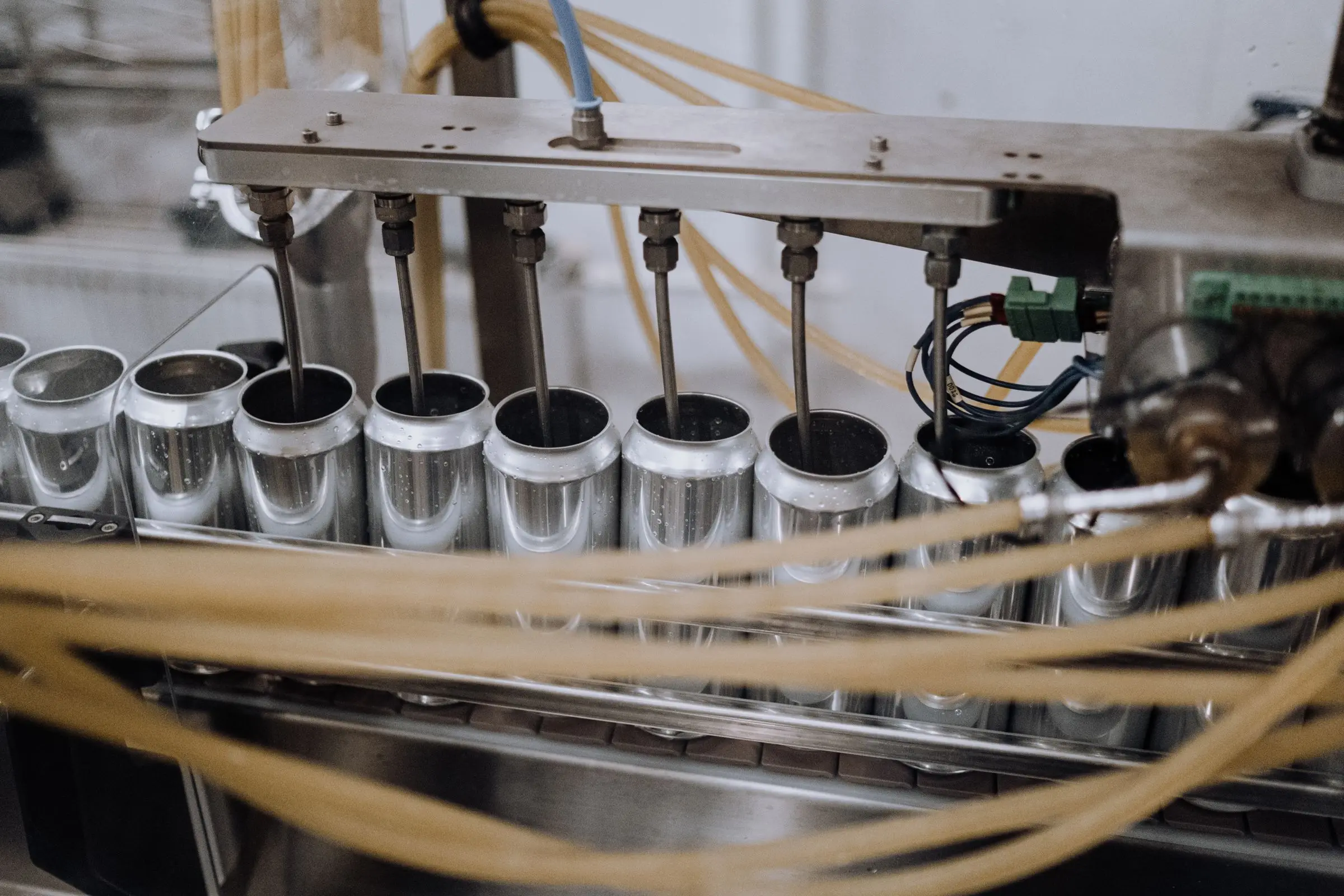
- Fillers and seamers at the end of the line, where the method matches our packaging line work
Can sensors survive daily washdown?
Yes, if they are chosen and mounted for it. Wet zones get sealed, stainless sensors rated for high-pressure washdown and sanitizing chemicals, with cable runs that do not trap water or product.
We agree every mounting point with your sanitation and food safety leads before installation. Nothing goes over open product, and every added part is recorded so it can be inspected like any other piece of equipment.
How do predictions line up with planned downtime?
The system reads your production and sanitation schedule and recommends the next planned stop that comes before the predicted failure. A bearing that will last ten more days gets changed during Thursday's sanitation shift rather than in the middle of a run.
Recommendations become work orders in your computerized maintenance management system (CMMS) with the part, the window and the evidence attached. When quality drift is the bigger concern than breakdowns, our predictive quality for food and beverage work uses the same plant data.
What we build for food and beverage plants
A washdown-ready sensor layer
Sealed sensors placed per failure mode, with mounting signed off by sanitation.
Asset wear models
Separate models for compressors, pumps, mixers and conveyors, each validated on your equipment.
Schedule-aware repair windows
Each alert matched to the next sanitation, changeover or planned shutdown that comes in time.
Plant and multi-site views
Asset health by line and plant for maintenance managers and operations leadership.
More for this industry and service
- Predictive maintenance: the full service
- Manufacturing and machine builders: everything we build
- Customer relationship management for machine builders
- Operational dashboards for manufacturers
- Predictive maintenance for packaging machine builders and plants
- Quality inspection for food and beverage plants
- Predictive maintenance for oil and gas operators
- Predictive maintenance for solar operators
LivePackaging machinery manufacturer, United States
The method, proven on a packaging machine builder's fleet
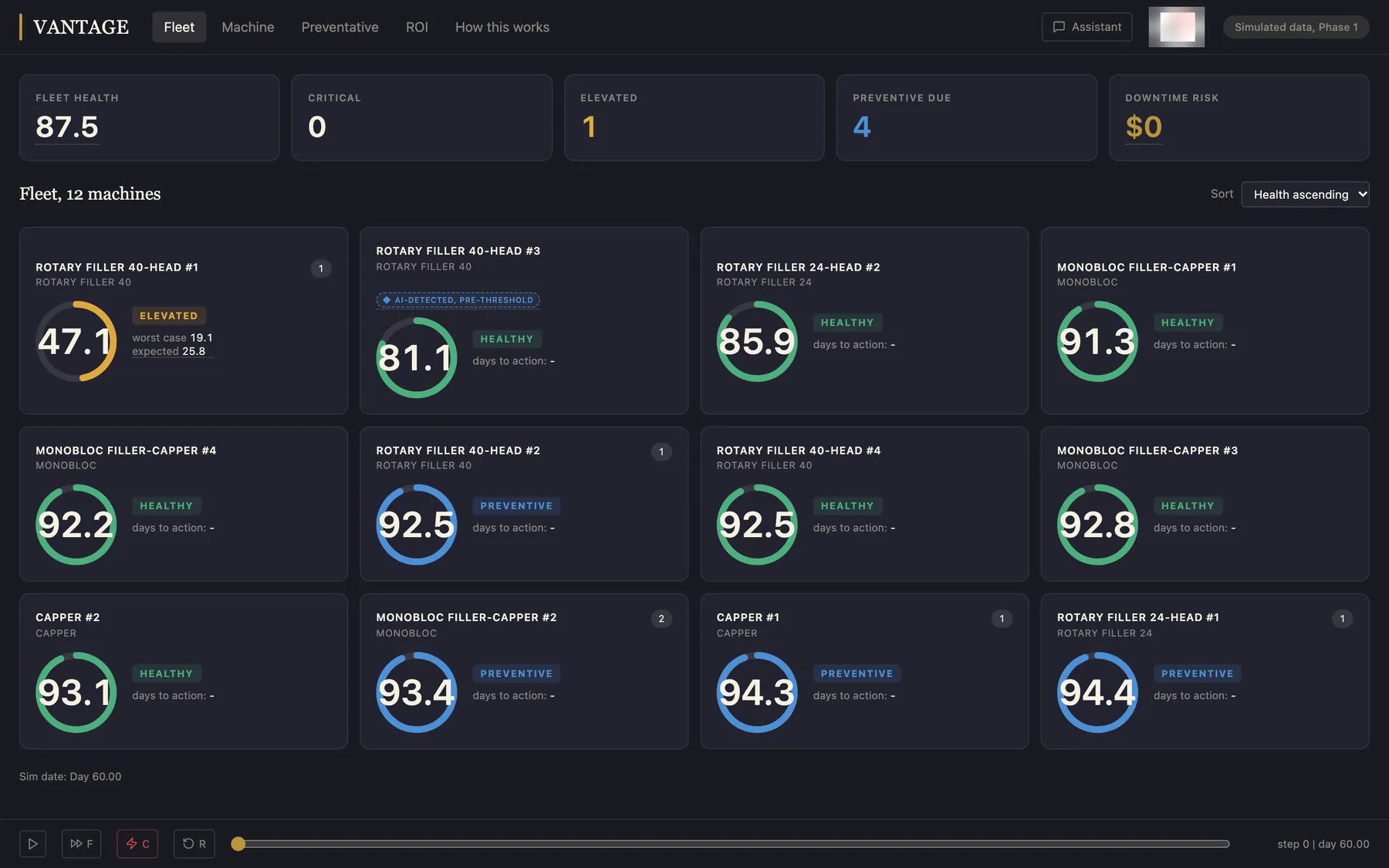
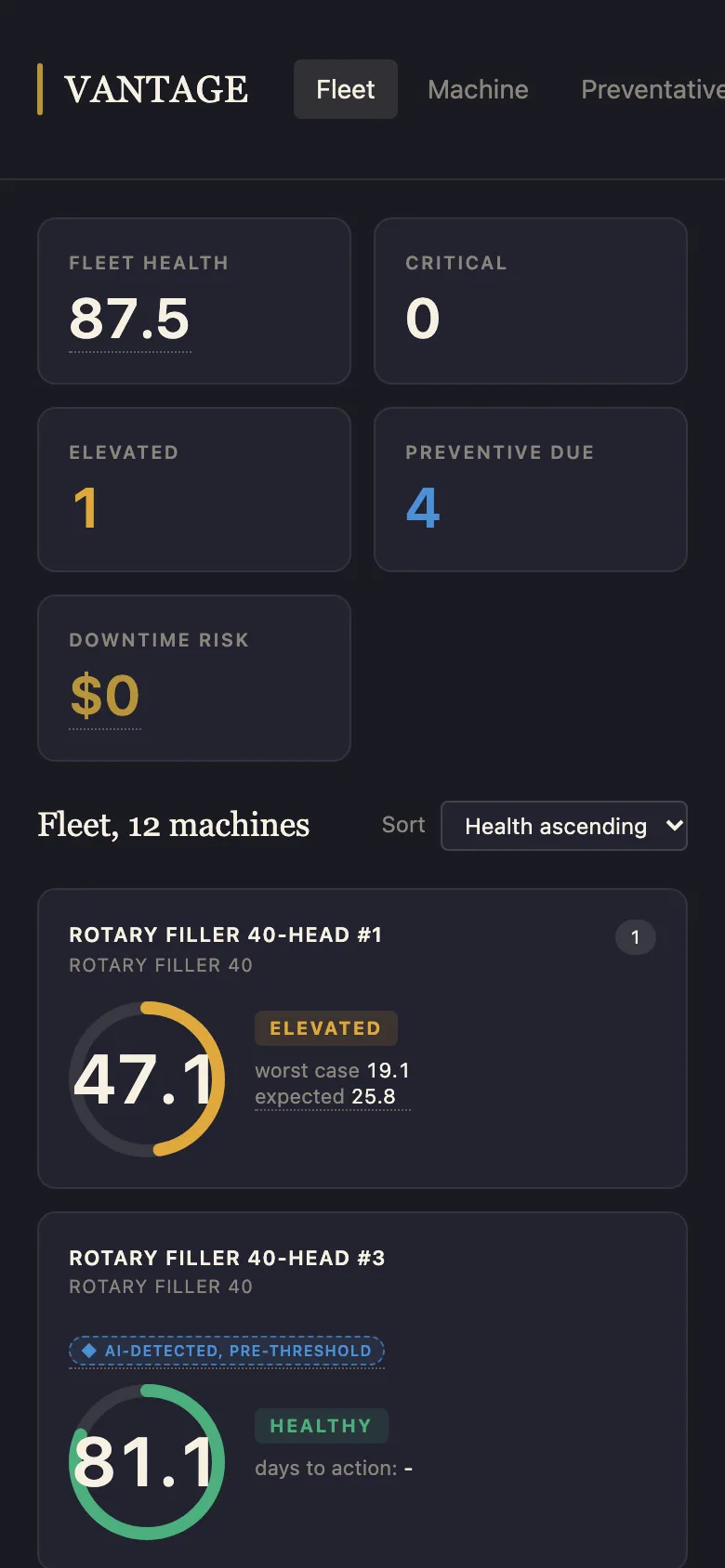
Our live predictive maintenance system runs for a builder of rotary fillers, the machines that fill bottles on many food and drink lines. It pairs heat, pressure and temperature sensors with a camera, predicts wear on individual parts and was tested against faults introduced deliberately before anyone trusted it. A food plant engagement follows the same discipline. See the rotary filler case.
Read the full storyHow an engagement works
Pick the critical assets
With maintenance and production, we choose the equipment whose failure costs the most product and line time.
Install around sanitation
Sensors go in during planned downtime, mounted to the plan your sanitation lead approved.
Validate each model
Every model is checked against known faults and past failures before its alerts reach a technician.
Connect the schedule and run it
Production and sanitation schedules feed the repair windows, and we keep maintaining the system after launch.
Frequently asked questions
Do we need to replace our existing controls?
No. We add sensors where signals are missing and read what your programmable logic controllers and SCADA already record.
Can it monitor ammonia refrigeration?
Yes. The models use compressor operating data plus sensors added on motors and bearings, and how anything connects near the refrigeration controls is agreed with your refrigeration and process safety leads before installation.
Will this help with audits?
Indirectly. Work orders created from predictions carry dates and evidence, which strengthens maintenance records, but we make no claim about any certification outcome.
Can it cover several plants?
Yes. Models are tuned per plant and per asset, and leadership sees every site in one view. Our manufacturing dashboards can sit on the same data.
Our maintenance records are mostly on paper. Is that a problem?
It slows the start but does not stop it. We digitize the failure history that matters for the first assets and let sensor data carry the models from there.
Where is plant data kept?
In the region agreed with you. Which sensor, production and sanitation records feed the models, and who in the plant sees each view, is settled during discovery.
Related
- ServicePredictive maintenanceVantage Systems builds predictive maintenance AI (artificial intelligence) that names the part about to fail and the window to fix it, from sensors, controller data and wear models.
- IndustryManufacturing and machine buildersVantage Systems builds failure prediction, quality models, plant dashboards and aftermarket systems for manufacturers and machine builders. See where to start.
- Predictive maintenanceFor packaging machine builders and plantsPredictive maintenance for packaging machines that names the failing part on fillers, cappers and labelers before the line stops. Live on a rotary filler fleet.
- Quality inspectionFor food and beverage plantsAI quality inspection for food and beverage lines: fill level, cap and seal, label and date code checks on every unit, with drift alerts by station and shift.
- ServiceData infrastructureVantage Systems does data infrastructure consulting that ends in working pipelines, a warehouse and one agreed definition for every number your leaders use.
- PricingHow we priceFixed scope and a fixed price for each phase, and what drives the cost of a build.
Built for operators with real scale. Most engagements are scoped in the tens of thousands of dollars and up.
Start a conversation.
Tell me what's slowing your operation down. I read every message myself and reply within one business day.