Quality inspection for food and beverage
AI quality inspection for food and beverage lines: fill, seal, label and code
Vantage Systems builds AI (artificial intelligence) quality inspection for food and beverage lines that checks fill level, cap and seal, label placement and date codes on every unit, and flags possible foreign objects for a person to review. It tracks drift by station and shift and ties every reject to its lot, so quality teams can find a cause before a run goes wrong.
Key facts
- What it is
- Cameras and line data with models that inspect each unit and warn of drift before rejects climb.
- Who it is for
- Beverage, dairy, sauce, snack and packaged food plants running filling, capping and labeling lines.
What does AI inspection check on a filling and packaging line?
Every unit, at line speed, against the defects your quality team names. The usual starting set:
- Fill level per filling valve, so one drifting head shows up on its own rather than hiding in a line average.
- Cap presence, height and skew, plus seal presence on cups and trays where a camera can see it.
- Label presence, position and skew, and the right label for the stock keeping unit (SKU) on the line.
- Date and lot codes read with optical character recognition (OCR) and matched against the expected code for the run.
- Foreign object risk: unusual shapes or materials in open containers, flagged for a person to review.
Does it replace metal detection, X-ray or our food safety plan?
No. Metal detectors, X-ray and the controls in your food safety plan, whether built on hazard analysis and critical control points or preventive controls, stay exactly as they are and stay owned by your food safety team. Our foreign object flags are an extra set of eyes that send suspect units to a person, never a release decision, and we make no food safety certification claims for the system.
Rejects are pulled by the line's existing reject mechanism through your PLC (programmable logic controller), so nothing about how product leaves the line changes without your engineers.
How does it predict a quality problem before rejects pile up?
By watching drift instead of only pass and fail. Fill levels creeping toward the low limit on two valves, cap skew rising after a changeover, a coder's print fading across a night shift: each shows up as a trend by station and shift, and the line lead is warned while units are still in spec.
Linking those trends to lot codes makes traceability practical, because a complaint can be answered with every image and reading for that lot, station and hour. The same signals often point to a worn part, which is where predictive maintenance for food and beverage takes over, and the wider predictive quality service covers other industries.
What we build for food and beverage plants
Inspection stations
Cameras, lighting and mounts specified for your washdown conditions and placed where each defect is visible at speed.
Defect models
Trained on your products and your defects, including deliberately made bad units, and tested before any reject depends on them.
Drift and shift reporting
Trends by valve, station, shift and SKU, alongside manufacturing dashboards when you want plant-wide views.
Lot traceability record
Every image, reading and reject linked to lot, line and time, searchable by the quality team.
More for this industry and service
LivePackaging machinery manufacturer, United States
Related work on filling equipment
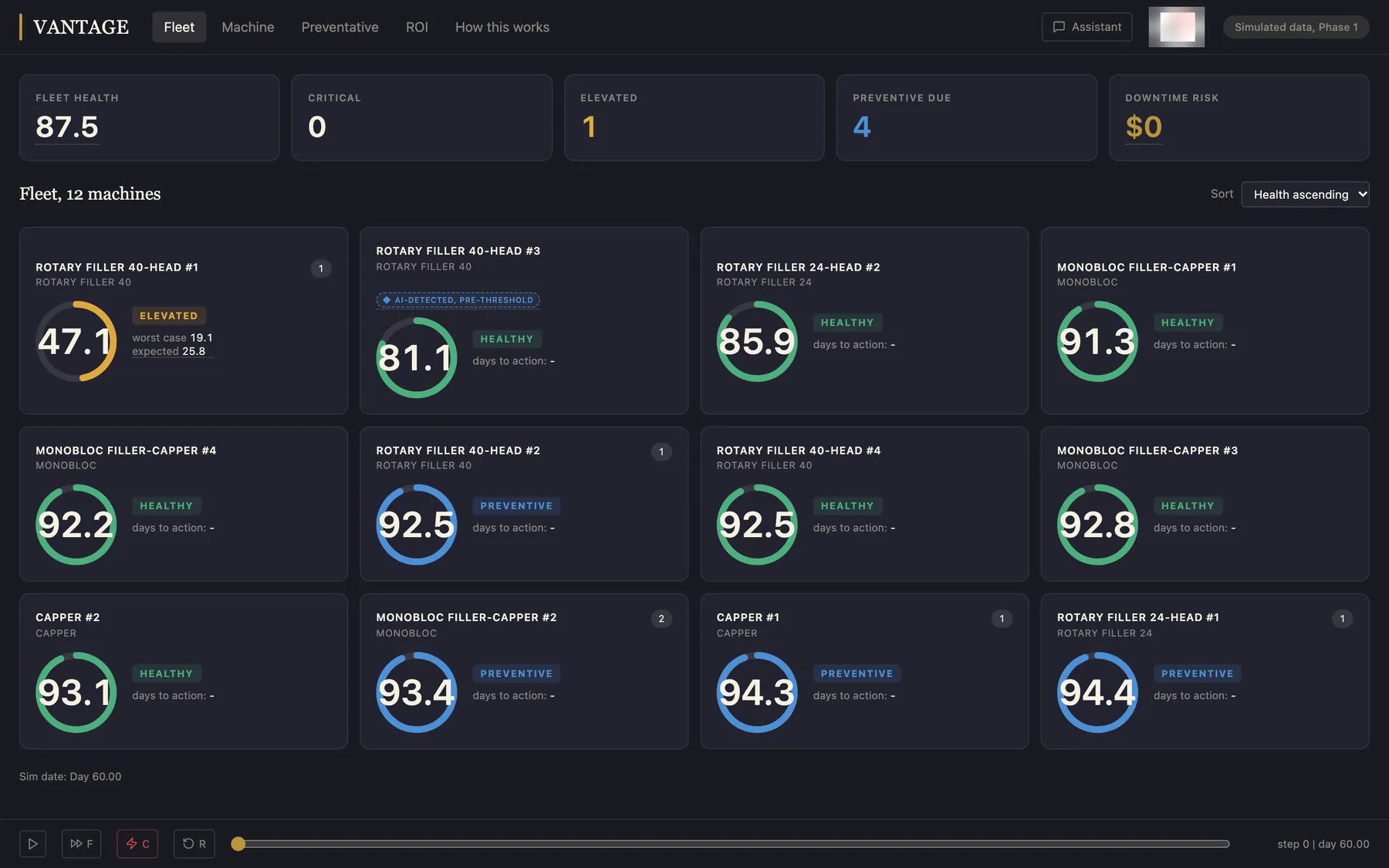
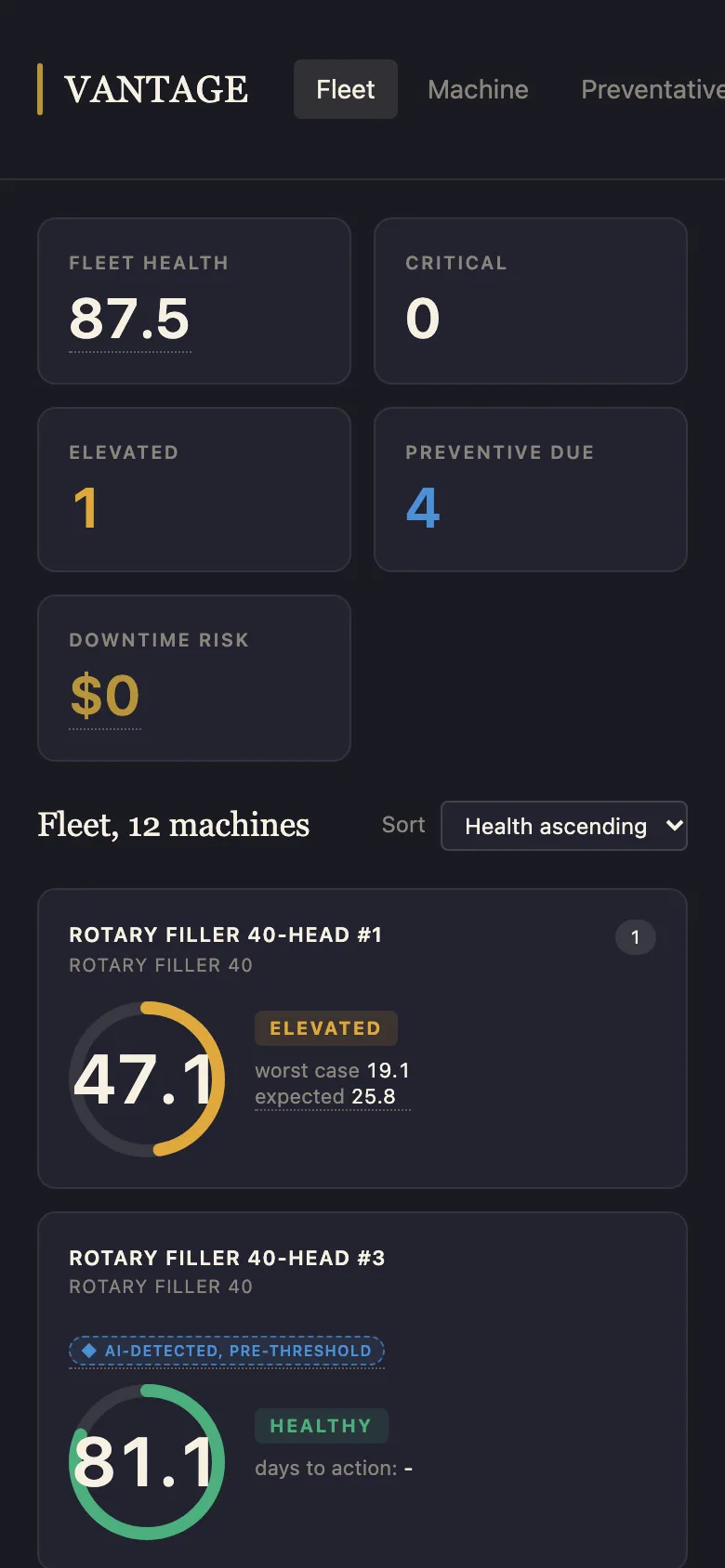
Our failure prediction for a packaging machine builder is maintenance, not quality inspection, but it runs on rotary fillers like those on many beverage lines. It pairs heat, pressure and temperature sensors with a camera where visual wear says more than a probe, and its part-level models were tested against faults introduced on purpose. Inspection models for your line are held to that same standard before a reject depends on them.
Read the full storyHow an engagement works
Map the line
We work through each line with your quality and maintenance leads, list the defects that hurt most and decide where a camera can see them.
Collect good and bad units
Images and line data are captured across shifts and changeovers, including defects made on purpose, and labeled with your quality team.
Run in parallel
The system inspects beside your current checks and rejects nothing until its calls match what your inspectors see.
Turn on rejects and drift alerts
Station by station, rejects and warnings go live, and models are retrained as new products, labels and packaging arrive.
Frequently asked questions
Can it keep up with line speed?
Usually, with the right cameras, lighting and processing at the line. We size hardware to your fastest SKU during discovery and say plainly if a station needs a different approach.
What happens when we change a label or launch a new product?
The new artwork and code format are loaded, and the new product is inspected in a watch-only mode before it can reject anything. Planned changeovers are part of the support plan.
Who decides what gets rejected?
Your quality team. They set the limits, approve each model before it controls rejects and review foreign object flags, which are never released automatically.
Does this help with audits?
It helps you show evidence, since every result is stored with its image, time and lot. It does not certify the plant or replace the records your food safety plan requires.
Does inspection need an internet connection?
No. It runs at the line, so a network outage does not stop it.
Related
- ServiceQuality inspectionVantage Systems builds AI (artificial intelligence) quality inspection: cameras that check every unit and models that flag a drifting station before a batch turns into scrap or rework.
- IndustryManufacturing and machine buildersVantage Systems builds failure prediction, quality models, plant dashboards and aftermarket systems for manufacturers and machine builders. See where to start.
- Predictive maintenanceFor food and beverage plantsPredictive maintenance for food and beverage plants that flags failing pumps, mixers, conveyors and compressors in time to repair them at the next sanitation.
- Operational dashboardsFor manufacturersManufacturing dashboards that put equipment effectiveness, scrap, downtime reasons and shift handover on one screen, from the line up to corporate.
- PricingHow we priceFixed scope and a fixed price for each phase, and what drives the cost of a build.
Built for operators with real scale. Most engagements are scoped in the tens of thousands of dollars and up.
Start a conversation.
Tell me what's slowing your operation down. I read every message myself and reply within one business day.