Installed base systems for equipment makers
CRM for machine builders, organized around the machines you have shipped
Vantage Systems builds a CRM (Customer Relationship Management system) for machine builders in which every serial number in the field is a record, linked to the plant it runs in, its configuration and its service history. Aftermarket parts, service contracts, dealer deals and new machine quotes all hang off that installed base, so sales and service finally work from the same facts.
Key facts
- What it is
- A customer system for original equipment manufacturer (OEM) businesses, keyed on machines rather than contacts.
- Who it is for
- Builders of packaging, processing, material handling and other capital equipment with a field population to serve.
- Connects to
- Enterprise resource planning (ERP), product configuration data, service tickets and machine sensor data.
Why should the installed base be the center of a machine builder's CRM?
Because parts, service and upgrades are all sold against machines already in the field, and a contact list cannot tell you about them. A builder needs to know that serial number so-and-so ships with a given set of change parts, was commissioned in a given year, sits in a given customer's second plant and has had its main drive rebuilt twice.
With that record in place, the obvious questions get answers. Which machines are out of warranty and lack a service contract? Which customers still run a model whose control platform is going obsolete? Who should hear about the retrofit kit engineering just released?
- Machine record: serial number, model, options, format parts, commissioning date, location
- Service history: visits, findings and parts consumed
- Commercial history: original order, contracts, upgrades and parts orders
How do dealers, parts and configured quotes fit together?
Dealers and distributors get deal registration, territories and visibility of the machines in their region, while the end customer stays known to the builder. That ends the familiar problem of a dealer relationship walking out the door with the customer list.
Quoting a configured machine draws on the option rules engineering already uses, so sales cannot quote a filler head count that will not fit the frame. Quote revisions keep their history, and a won quote becomes the first entry in the new machine's record.
How does predictive maintenance turn service into a product?
Once the installed base lives in one record, sensor data from each machine can attach to it, and service becomes something you sell by subscription instead of dispatching after a breakdown. Wear predictions create a parts quote or a planned visit for the right machine, in the right plant, before the line stops.
Our predictive maintenance systems supply the predictions, and the CRM turns each one into a commercial next step. Our guide to predictive maintenance for builders covers the business model in more depth.
What we build for machine builders
An installed base register
Every shipped machine with its configuration, location and full commercial and service history.
Aftermarket pipelines
Parts quotes, service contract renewals, upgrades and retrofits, each tied to specific serial numbers.
A dealer and distributor portal
Territories, deal registration and regional machine lists, with the builder keeping the end customer record.
Configured quoting
Quotes built from engineering's option rules, with revisions kept and won quotes seeding the machine record.
More for this industry and service
- Customer relationship management: the full service
- Manufacturing and machine builders: everything we build
- Operational dashboards for manufacturers
- Predictive maintenance for food and beverage plants
- Predictive maintenance for packaging machine builders and plants
- Quality inspection for food and beverage plants
- Customer relationship management for construction companies
- Customer relationship management for home services companies
LivePackaging machinery manufacturer, United States
A builder already reading its own machines
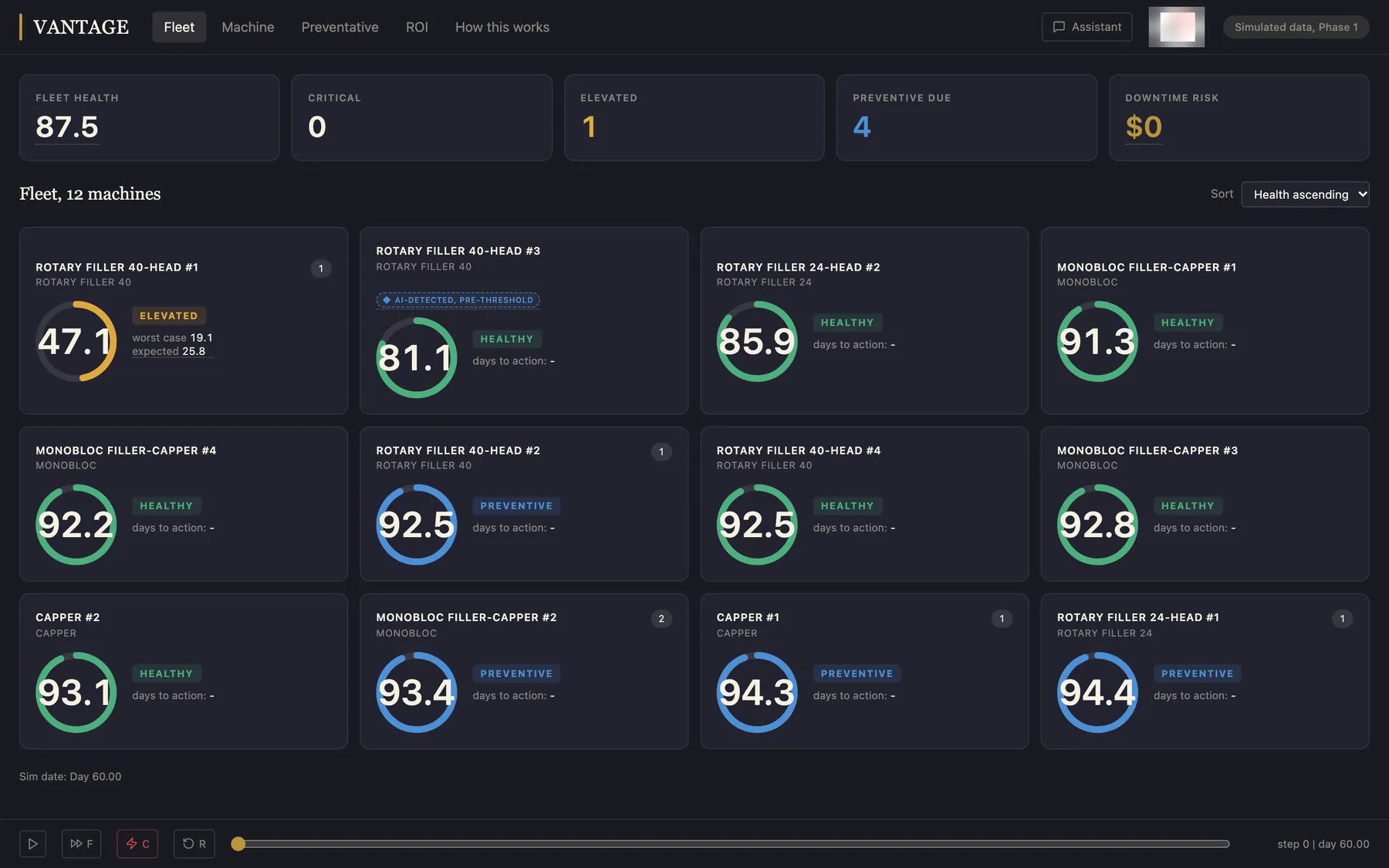
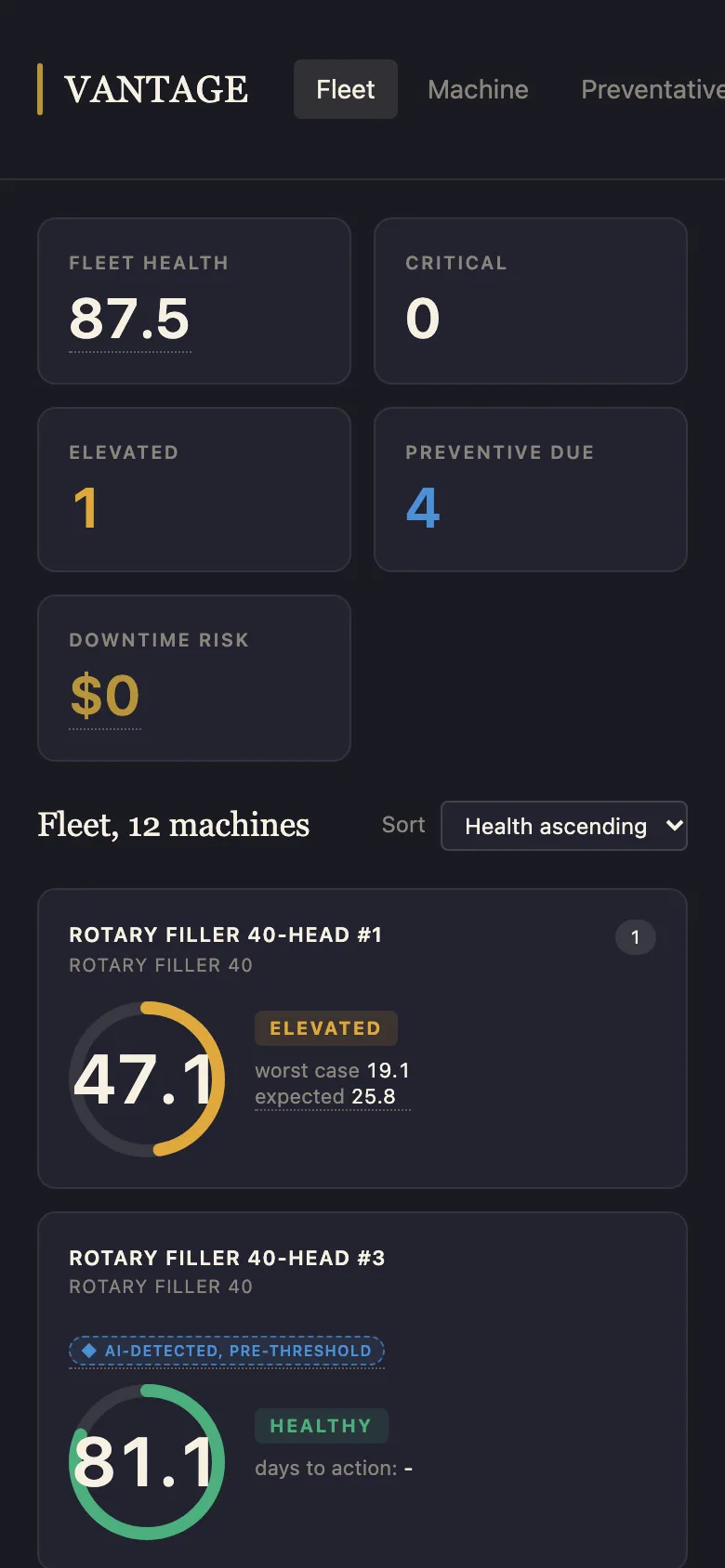
A rotary filler builder with about 250 machines in customer plants runs our part-level failure prediction on 12 of them today. Each prediction names a specific part on a specific machine, which is exactly the record an installed base CRM needs to turn a warning into a parts order or a service visit. Read the packaging machine builder story.
Read the full storyHow an engagement works
Assemble the machine list
We reconcile shipping records, order history and service files into a first register of serial numbers.
Map the aftermarket
Parts, service and sales leaders agree how contracts, upgrades and dealer deals should flow.
Build register, pipelines and portal
Weekly releases, starting with the installed base view your service desk uses every day.
Connect machine data
Where sensors exist, their alerts attach to the machine record, and we keep running the system after launch.
Frequently asked questions
Does this replace our ERP?
No. The ERP keeps orders, bills of materials and invoicing. The CRM reads orders and parts history from it and adds the installed base and the commercial pipeline around each machine.
Our machine records are incomplete. Can we still start?
Yes, and most builders start there. We assemble the register from whatever exists, flag gaps, and let service technicians confirm details on their next visit.
Can dealers use it without seeing each other's customers?
Yes. Each dealer sees its own territory and registered deals only, and the builder sees everything.
Do we need sensors on our machines for this to be useful?
No. The register and the parts and service pipelines are useful on day one without them. Sensor data is a later phase that adds predicted needs to the same records.
Can it handle machines sold into the Gulf or other regions?
Yes. Each machine record carries its country, customer data stays in the region you choose, and we run systems in the United States, Saudi Arabia, Pakistan and Egypt today. See our work for examples.
Related
- ServiceCustomer relationship managementVantage Systems builds custom CRMs (customer relationship management) around your pipeline stages and compliance steps, wired to your phones and software, with AI (artificial intelligence) writing notes and follow-ups.
- IndustryManufacturing and machine buildersVantage Systems builds failure prediction, quality models, plant dashboards and aftermarket systems for manufacturers and machine builders. See where to start.
- Predictive maintenanceFor packaging machine builders and plantsPredictive maintenance for packaging machines that names the failing part on fillers, cappers and labelers before the line stops. Live on a rotary filler fleet.
- InsightPredictive maintenance for OEMs (original equipment manufacturer): turning service into a productHow machine builders turn predictive maintenance into a paid service: what to sense, part-level models, testing against induced faults and data rights to sign.
- Customer relationship managementFor construction companiesA custom CRM for construction firms that runs the bid pipeline, tracks prequalification and owner relationships, and shows which bids you actually win and why.
- PricingHow we priceFixed scope and a fixed price for each phase, and what drives the cost of a build.
Built for operators with real scale. Most engagements are scoped in the tens of thousands of dollars and up.
Start a conversation.
Tell me what's slowing your operation down. I read every message myself and reply within one business day.